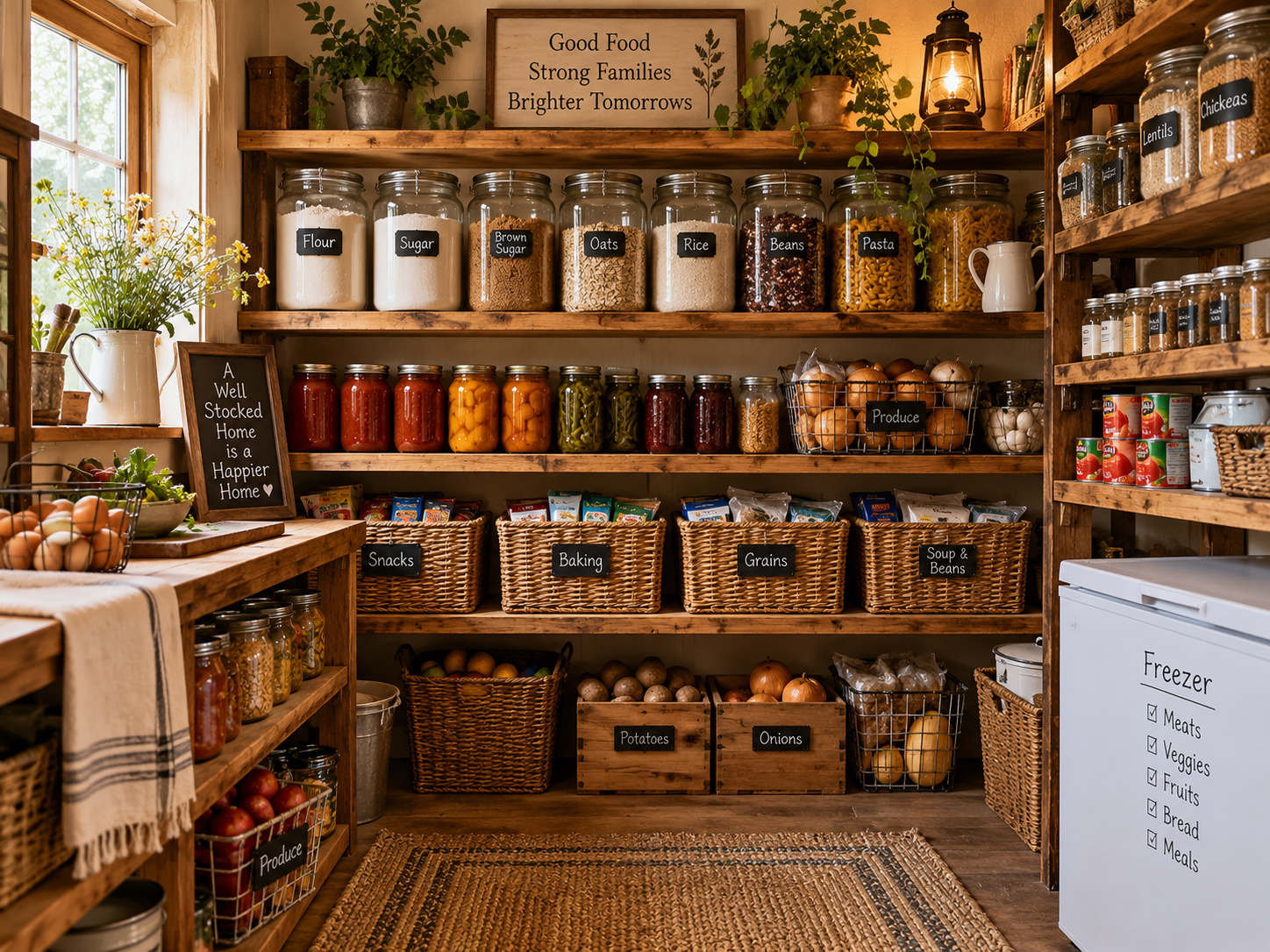
Learning how to build a self-sufficient pantry can make everyday meals easier and help your household feel more prepared. You do not need shelves packed with months of food. Start with useful staples your family actually eats, then slowly add homemade basics, preserved foods, and backup ingredients over time.
1. Start With the Foods Your Family Uses Most
A practical pantry should be built around the meals your household already eats. Make a list of the ingredients you reach for every week, such as rice, pasta, oats, flour, beans, canned tomatoes, broth, seasonings, and cooking oils.
Start by keeping a small backup of those everyday foods instead of buying random items simply because they have a long shelf life.

2. Keep Basic Baking Ingredients on Hand
Flour, yeast, baking powder, baking soda, sugar, salt, and other basic baking ingredients allow you to make many foods at home instead of depending on packaged versions.
With a few pantry basics, you can make bread, biscuits, pancakes, tortillas, muffins, and other simple foods whenever you need them.
Picture idea: rustic baking shelf with flour, yeast, sugar, baking powder, oats, and homemade bread nearby.

3. Stock Versatile Dry Staples
Dry staples give you a lot of flexibility when planning meals. Rice, beans, lentils, pasta, oats, cornmeal, quinoa, and other grains can be used in many different dishes and usually store well when kept properly.
Choose foods your family already enjoys so your pantry stays practical instead of becoming a collection of ingredients you never use.

4. Keep Canned and Shelf-Stable Foods
Canned vegetables, tomatoes, fruit, beans, soups, tuna, chicken, and other shelf-stable foods can make meals easier when fresh ingredients are limited.
Try to keep a variety of foods that can be turned into complete meals instead of stocking only one type of item.

5. Learn to Make a Few Staples From Scratch
One important part of learning how to build a self-sufficient pantry is knowing how to make some commonly purchased foods at home.
Bread, broth, sauces, seasoning blends, tortillas, yogurt, and simple baking mixes are good skills to learn gradually. You do not need to make everything yourself—focus on the items your family uses most often.

6. Preserve Food When You Have Extra
Freezing, dehydrating, fermenting, and canning can help you save garden harvests, seasonal produce, and extra food before it goes to waste.
Start with one preservation method and learn how to do it safely before adding more techniques.

7. Use a Simple Rotation System
A pantry works best when food gets used instead of forgotten. Place older items toward the front and newer items behind them so you naturally use the oldest food first.
Check your pantry regularly and add foods that are running low to your shopping list.

8. Build Your Pantry Gradually
You do not need to fill an entire pantry in one shopping trip. Add an extra bag of rice, a few cans, flour, oats, or another useful staple whenever your budget allows.
Over time, those small additions can create a well-stocked pantry that helps you rely less on last-minute grocery trips and gives your family more flexibility.

Build a Pantry That Works for Your Family
Build a Pantry That Works for Your Family
A self-sufficient pantry does not need to be huge or perfect. It should contain foods your family actually eats, ingredients you know how to use, and enough variety to make everyday meals easier.
Start with the basics, build slowly, and learn a few from-scratch and food-preservation skills along the way.
Peaceful Roots is about creating a calmer, more capable, and self-sufficient home one simple step at a time. 🌿
Leave a Reply